
Nano Hydroxyapatite vs Fluoride: Which Toothpaste Is Better?
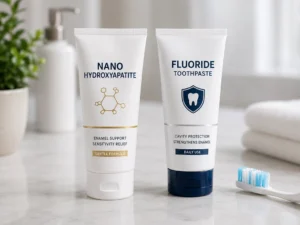
If you’ve been shopping for toothpaste recently, you’ve probably noticed a growing number of products containing nano hydroxyapatite instead of fluoride. Many brands claim it is a safer, more natural way to strengthen teeth and prevent cavities.
So, should you make the switch?
At Glow Dental in Freeport, NY, we believe in making recommendations based on scientific evidence, not marketing trends. While nano hydroxyapatite is a promising ingredient with several potential benefits, fluoride remains our recommendation for most patients because it has the strongest scientific evidence for preventing cavities.
What is fluoride?
Fluoride is a naturally occurring mineral that has been used in dentistry for more than 70 years. It strengthens tooth enamel by helping it form fluorapatite, a mineral that is more resistant to acid attacks from bacteria and sugary foods.
Fluoride also helps reverse the earliest stages of tooth decay before a cavity develops.
Its effectiveness is supported by decades of clinical research and endorsed by organizations including the American Dental Association, the American Academy of Pediatric Dentistry, the Centers for Disease Control and Prevention, and the World Health Organization.
What is nano hydroxyapatite?
Hydroxyapatite is the primary mineral that makes up your tooth enamel. Nano hydroxyapatite is a laboratory produced version of this same mineral, made into extremely small particles that can adhere to the tooth surface.
Rather than changing the chemistry of enamel like fluoride does, nano hydroxyapatite helps fill microscopic defects in the enamel and may reduce tooth sensitivity by sealing tiny exposed areas of dentin.
It was originally developed by NASA to help astronauts maintain healthy teeth during long space missions and has become increasingly popular in oral care products over the past decade.
How do they work?
Although both ingredients strengthen teeth, they work differently.
Fluoride strengthens enamel by encouraging the formation of fluorapatite, making teeth more resistant to future acid attacks and decay.
Nano hydroxyapatite works by depositing tiny mineral particles onto the tooth surface, helping repair microscopic areas of enamel wear and reducing sensitivity.
Both approaches support healthier enamel, but fluoride has a much longer history of proven clinical success.
Which one has stronger scientific evidence?
When it comes to preventing cavities, fluoride remains the clear leader.
Fluoride has been studied extensively for decades in children and adults around the world. Hundreds of clinical studies have consistently demonstrated its ability to strengthen enamel, reverse early tooth decay, and significantly reduce the risk of cavities.
Nano hydroxyapatite has produced encouraging results, particularly for enamel remineralization and tooth sensitivity. Several systematic reviews have found that it performs similarly to fluoride in many laboratory studies and smaller clinical trials.
However, researchers have also noted important limitations. Many of the available studies involve relatively small numbers of patients, use different study designs, and do not provide the long term clinical data that exists for fluoride.
A 2019 systematic review published in Clinical Oral Investigations concluded that nano hydroxyapatite shows considerable promise for remineralizing early enamel lesions, but emphasized that additional well designed clinical trials are needed.
A more recent 2023 systematic review reached a similar conclusion, finding encouraging results while also noting that the current body of evidence is still limited compared with fluoride.
In evidence based dentistry, promising early research is exciting, but it does not replace decades of consistent clinical outcomes.
Which toothpaste do we recommend?
Nano hydroxyapatite is one of the most exciting developments in preventive dentistry, and we expect to see more high-quality research over the coming years.
However, at this point, fluoride remains our recommendation for most patients.
The reason is simple. The evidence is stronger.
Fluoride has repeatedly been shown to reduce cavities, strengthen enamel, and improve long term oral health across a wide range of patients.
Nano hydroxyapatite may become an excellent alternative in the future, but current research has not yet reached the same level of evidence.
For that reason, Glow Dental recommends fluoride toothpaste for most patients, especially those who:
- Have a history of cavities
- Wear braces or clear aligners
- Have dry mouth
- Consume sugary or acidic beverages regularly
- Have a higher risk of tooth decay
Nano hydroxyapatite may still be appropriate for certain patients, particularly those with tooth sensitivity or those who prefer to avoid fluoride. If you are considering making the switch, we encourage you to discuss it with your dentist first so we can recommend the best option for your individual needs.
What about sensitive teeth?
One area where nano hydroxyapatite appears particularly promising is tooth sensitivity.
By filling microscopic openings in enamel and exposed dentin, it may reduce sensitivity caused by cold foods, hot drinks, whitening treatments, or gum recession.
If sensitivity is your primary concern, nano hydroxyapatite toothpaste may be worth considering. In some cases, patients may even benefit from using nano hydroxyapatite toothpaste while continuing to receive professional fluoride treatments during routine dental visits.
The best toothpaste is the one that fits your needs
No single toothpaste is right for everyone.
Your risk of cavities, enamel wear, gum recession, dry mouth, orthodontic treatment, diet, and overall oral health all influence which products are most appropriate.
Rather than following the latest social media trend, we recommend choosing products supported by high quality research and personalized recommendations from your dentist.
Personalized dental care in Freeport, NY
At Glow Dental, we believe patients deserve recommendations based on science, not marketing.
Whether you are looking for the best toothpaste, dealing with sensitive teeth, or trying to prevent cavities, we are here to help you make informed decisions about your oral health.
Call or text Glow Dental at (516)-345-3031 to schedule your consultation. We will evaluate your oral health, discuss your goals, and recommend the products and treatments that are best for your smile.
Frequently Asked Questions
Is nano hydroxyapatite better than fluoride?
Current research suggests nano hydroxyapatite is promising, but fluoride remains the gold standard for cavity prevention because it is supported by decades of high quality clinical research.
Can nano hydroxyapatite replace fluoride?
Not at this time. While studies have shown encouraging results, researchers generally agree that more large scale, long term clinical trials are needed before nano hydroxyapatite can be considered an equivalent replacement for fluoride.
Is nano hydroxyapatite safe?
Current evidence suggests nano hydroxyapatite is safe for use in toothpaste. However, fluoride remains the ingredient with the strongest evidence for preventing tooth decay and is still recommended for most patients.
Should I switch to nano hydroxyapatite toothpaste?
It depends on your individual oral health. Patients with significant tooth sensitivity may benefit from nano hydroxyapatite, while most patients who are focused on cavity prevention should continue using fluoride toothpaste. Your dentist can help determine which option is best for you.
References
Huang S, Gao S, Cheng L, Yu H. Remineralization potential of nano hydroxyapatite on initial enamel lesions: A systematic review. Clinical Oral Investigations. 2019.
Niwa M, et al. Nano hydroxyapatite in preventive dentistry: A systematic review. Journal of Dentistry. 2023.
American Dental Association. Fluoride Toothpaste Recommendations.
Centers for Disease Control and Prevention. Community Water Fluoridation and Fluoride Use.