
Building Healthy Smiles Early: A Dentist’s Guide to At-Home Dental Tools for Infants & Toddlers
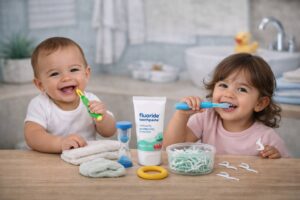
As dentists, one of the most common questions we hear from parents is, “When should I start brushing my child’s teeth?” The answer often comes as a surprise—oral care begins well before that first tiny tooth appears.
The early years are when habits form, bacteria establish, and cavity risk begins. The good news? You don’t need complicated routines or expensive gadgets. With a few simple, well-chosen tools and a consistent approach, you can protect your child’s oral health from the very beginning and make dental care a normal, low-stress part of everyday life.
Use the guide below to learn how to set your infant or toddler up for success at home, with practical tools and strategies grounded in evidence and everyday dental practice.
Start Earlier Than You Think
One of the most important (and often missed) recommendations:
- Begin cleaning your baby’s mouth from birth
- Start brushing as soon as the first tooth appears (around 6 months)
- Schedule the first dental visit by age 1
Why? Tooth decay can begin as soon as teeth erupt and early habits are easier to build than to fix later.
Core At-Home Dental Tools
- Soft Cloth or Infant Gum Brush (0–6 months)
- What the guidelines say: Clean gums daily even before teeth erupt
- Best use:
- Damp washcloth or silicone finger brush
- Wipe gums after feeding and before bed
- Why it matters: Removes bacteria and introduces your child to oral care early, reducing resistance later.
- Infant Toothbrush (First Tooth Stage)
- What the guidelines say: Use a soft, age-appropriate toothbrush once teeth erupt
- Best features:
- Ultra-soft bristles
- Small head
- Easy grip for caregiver
- Pro tip: At this stage, you are doing the brushing—not your child.
- Fluoride Toothpaste (Rice-Sized Amount)
- What the guidelines say:
- Use fluoride toothpaste as soon as the first tooth appears
- Use a smear the size of a grain of rice under age 3
- Brush twice
- Why fluoride matters: Fluoride strengthens enamel, helps prevent cavities, and even reverse early decay.
- Important: Always supervise to minimize swallowing.
- What the guidelines say:
- Toddler Toothbrush (1–3 years)
- What the guidelines say: Parents should brush or assist until at least age 6–7.
- Best approach: Let your child “try” first, then parents finish thoroughly.
- Key principle: Skill-building + supervision = success
- Floss (When Teeth Touch)
- What the guidelines say: Start flossing when two teeth touch
- Why this matters: Cavities in young children commonly form between teeth
- Best tool: Soft, flexible toddler floss picks
- Safe Teething Tools
- What the guidelines say:
- Choose firm rubber or silicone teethers
- Avoid numbing gels unless prescribed
- Avoid: Frozen or liquid-filled teethers (can damage gums)
- What the guidelines say:
Tools That Improve Consistency (Behavioral Science Matters)
While not strictly “clinical,” these are strongly supported by pediatric behavior research:
- 2-minute timers or songs → improve brushing duration
- Step stools & mirrors → promote independence
- Routine charts → reinforce habits
Consistency, not perfection, is what makes the biggest difference in preventing disease.
Daily Routine (What Experts Agree On)
Based on established pediatric dental guidelines:
- Brush twice daily (morning and bedtime)
- Use an age-appropriate amount of fluoride toothpaste
- Supervise brushing every time
- Floss once daily once teeth begin to touch
Critical Prevention Tips Parents Often Miss
- No bottles in bed: Milk or juice overnight dramatically increases cavity risk.
- Fluoride matters (and is safe in correct amounts)
- First dental visit by age 1: Early visits reduce long-term dental problems
- Professional fluoride varnish: Recommended every 3–6 months for young children
Are You Making These Common Dental Mistakes?
- Waiting until age 2–3 to start brushing
- Using too much toothpaste
- Letting toddlers brush unsupervised
- Skipping flossing
- Choosing “fluoride-free” toothpaste (less cavity protection)
Final Takeaway
The best at-home dental setup is noy complicated, but rather evidence-based, consistent, and parent-led.
If you follow just a few key principles:
- Start early
- Use fluoride correctly
- Brush twice daily
- Stay involved
…you will dramatically reduce your child’s risk of cavities and build lifelong healthy habits.
Healthy smiles do not start in the dental office; they start at home!
Schedule your child’s next visit with our pediatric dentist at Glow Dental in Freeport, NY for a comprehensive evaluation and a fun, educational experience. Call or text us at 516-345-3031.