
What Do My Baby or Toddler’s Teeth Indicate About the Need for Braces in the Future?
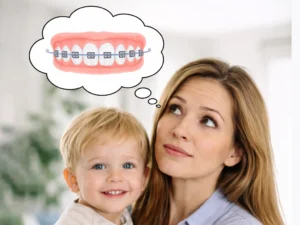
It’s one of the most common questions parents ask during early dental visits: “Do you think my child will need braces?”
If your child still has baby teeth, the honest answer is that it’s oftentoo soon to know for sure. However, that does not mean early dental visits cannot provide valuable insight. At Glow Dental in Freeport, NY, we use your child’s primary (baby) teeth to monitor growth, habits, and early signs that may influence future orthodontic needs.
Is it Too Early to Know If My Child Will Need Braces?
In most cases, yes. Baby teeth are temporary, and many alignment concerns naturally improve as a child grows. Jaw development, tooth size, and eruption patterns change significantly over time.
That said, baby teeth still give us important clues about how your child’s smile may develop and whether early intervention might be helpful later.
What Baby Teeth Can Tell Us About Future Orthodontic Needs
While we cannot predict braces with certainty, primary teeth allow dentists to evaluate several key factors:
- Spacing and Crowding
- Spacing between baby teeth is normal and healthy
- Crowded baby teeth may suggest limited space for adult teeth
- Proper spacing often means adult teeth will have room to erupt correctly
- Tooth Eruption Patterns
- Teeth that erupt significantly out of position
- Teeth that come in very early, very late, or unevenly
- Crossbites or teeth that do not align properly when biting
These patterns help us monitor jaw growth and tooth guidance over time.
Oral Habits That Can Affect Alignment
Certain childhood habits can influence jaw and tooth development, including:
- Prolonged thumb or finger sucking
- Pacifier use beyond toddler years
- Mouth breathing
- Tongue thrusting
When identified early, guidance or habit intervention can help reduce the risk of future orthodontic concerns.
Bite and Jaw Development
Even with baby teeth, we assess how the upper and lower jaws relate to each other. The following early signs may indicate the need for orthodontic evaluation later in childhood:
- Underbite or overbite
- Narrow dental arches
- Facial asymmetry
When Is the Right Time for an Orthodontic Evaluation?
The American Association of Orthodontists recommends an initial orthodontic evaluation around age 7. By this age, a mix of baby and permanent teeth allows for a more accurate assessment of alignment and jaw growth.
However, regular pediatric dental visits before this age are essential. They allow pediatric dentists to:
- Track development over time
- Identify concerns early
- Refer to an orthodontist if needed
What Parents Should Focus on Now
For toddlers and young children, the most important priorities are:
- Healthy baby teeth
- Proper oral hygiene
- Monitoring growth and habits
- Establishing positive dental experiences
At Glow Dental, we emphasize prevention and observation, not rushing into treatment before it’s appropriate.
Pediatric Dental and Orthodontic Care Under One Roof at Glow Dental
At Glow Dental, we believe informed parents make confident decisions and coordinated care makes all the difference. Our practice is uniquely designed so that the pediatric dentist and orthodontist work side by side, allowing your child’s dental development to be evaluated comprehensively and thoughtfully from an early age.
This collaborative approach means we can:
- Monitor tooth and jaw development over time
- Identify potential orthodontic concerns early, without rushing treatment
- Coordinate care seamlessly when orthodontic treatment becomes appropriate
For parents in Freeport, NY 11576, and the surrounding Long Island community, this team-based model provides clarity, continuity, and peace of mind. Your child’s smile is guided by specialists who communicate closely and share a unified treatment philosophy.
Early dental visits do not predict braces, but they do ensure your child’s smile is supported at every stage of growth, with expert guidance every step of the way.